
 By FinnoSphere
 The next phase of the crypto industry will not be driven by memes.
It will be driven by real adoption.
For years, blockchain projects competed over narratives, token prices, and trading volume. But the future winners of Web3 will be the platforms capable of connecting digital assets with real-world economic activity.
That is exactly the direction EPAY is taking.
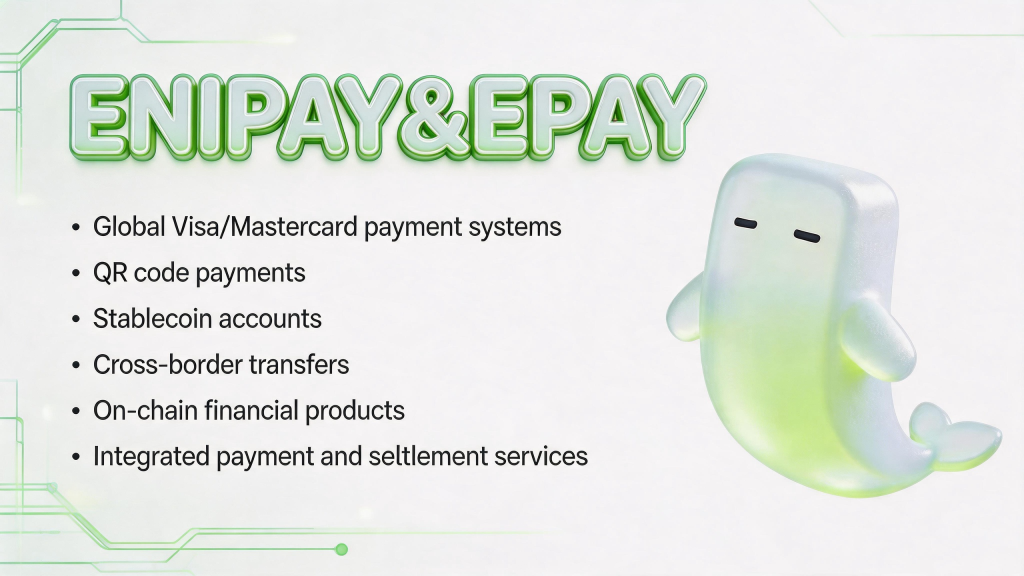
EPAY is not simply a token ecosystem. It is part of a much larger global payment infrastructure powered by ENIPAY, combining stablecoin settlement, global payment channels, digital financial services, and future AI payment capabilities into one unified network.
The vision behind EPAY is simple:
make crypto assets truly usable in everyday life.
Through ENIPAY’s infrastructure, users can access:
Global Visa/Mastercard payment systems
QR code payments
Stablecoin accounts
Cross-border transfers
On-chain financial products
Integrated payment and settlement services
This creates a seamless bridge between Web2 commerce and Web3 finance.
But the real strength of EPAY lies in its ecosystem structure.
Unlike traditional crypto platforms that depend purely on speculation, EPAY is designed around real payment traffic and long-term capital circulation. Every payment flow, merchant transaction, and ecosystem interaction continuously contributes to liquidity generation and platform growth.
As global stablecoin usage continues to expand, digital payment infrastructure is becoming one of the most competitive sectors in the blockchain industry. Major financial institutions, fintech companies, and even governments are accelerating toward digital settlement systems.
At the same time, AI Agents are beginning to participate in online commerce, automated services, and digital asset management. This creates a completely new demand for intelligent payment systems capable of supporting both humans and AI-driven transactions.
EPAY is positioning itself at the center of these two powerful global trends:
the rise of stablecoin finance
and the growth of AI-powered digital economies.
In the long run, the biggest value in blockchain may not come from trading platforms alone, but from the infrastructure that powers how money moves globally.
And EPAY aims to become part of that future.